
A green harvest in Paraíba
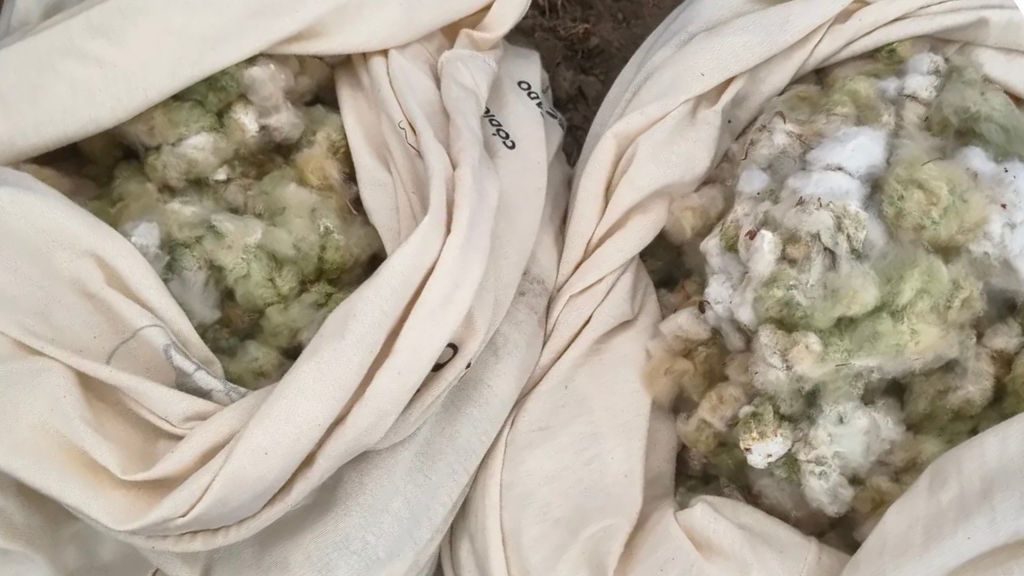
This cotton was never dyed. It comes off the plant a soft, pale green.
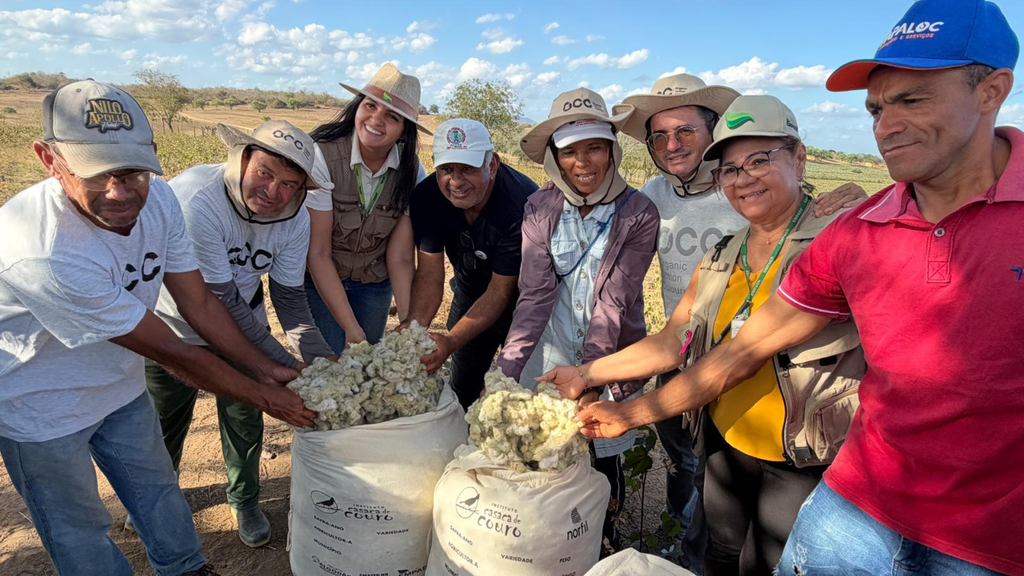
This season, family farmers in the Acauã settlement in Itatuba, in Paraíba’s Agreste region, began harvesting BRS Verde, a naturally green cotton bred in Brazil. As Jornal da Paraíba reported in October, the fibre is sold to us at Organic Cotton Colours, through the Algodão ATER Paraíba project. More than 70 farming families in the region take part.
Green cotton might sound like a new invention, but fact it belongs to one of the oldest textile traditions in the Americas, one that came close to disappearing.
Cotton has a colourful history
People in the Andes were growing cotton about 5,000 years ago, and it did not come only in white. It grew in browns, tans, reddish browns and greens.
On the north coast of Peru, the Moche people grew and wove many of these shades. Farmers there have kept native naturally coloured cotton going for the last two thousand years.
Further north, Mexico is where Gossypium hirsutum comes from, the species behind about 95% of the cotton grown in the world today. On the coast of Oaxaca, native varieties still grow in at least five colours. Indigenous weavers there have spun them by hand for thousands of years and woven them on backstrap looms.
Why naturally coloured cotton nearly disappeared
Industrial spinning changed what counted as good cotton. Machines needed long, even fibres in a colour that could be bleached and dyed to order. Naturally coloured cottons have shorter fibres and lower yields, so they lost out.
By the 1990s, white commercial varieties had replaced most native naturally coloured cottons in Central and South America, as well as in Africa and Asia.
The comeback
Over the last few decades, farmers, weavers and researchers across Latin America have been bringing naturally coloured cotton back.
- Peru: In 2008, Law 29224 declared native Peruvian cotton part of the nation’s genetic, ethnic and cultural heritage.
- Mexico: Since 2011, farmers on the Oaxaca coast have been replanting native naturally coloured cotton in their milpas, the traditional fields shared with maize, at the request of local weavers.
- Brazil: Naturally coloured cotton plants had survived in Brazil, growing wild among white cotton and used mostly for handicrafts in Bahia and Minas Gerais. From 1984, Embrapa, Brazil’s agricultural research agency, kept them in a seed bank in Patos, Paraíba. In 1989, after Japanese textile buyers showed interest in the fibre, it began breeding them (Embrapa).
Embrapa added green cotton to its research in 1996 and presented its first brown variety to farmers in 2000. BRS Verde, with its light green fibre, followed in 2002. Today the range also includes reddish-brown BRS Rubi and other shades.
What makes it green
The colour of green cotton is in the fibre itself, in a thin waxy layer that also gives it some natural protection from UV light. Brown and reddish cottons get their colour from tannins inside the fibre cells instead.
Because the colour grows in, the fabric can skip bleaching and synthetic dyeing, two of the most water- and chemical-heavy steps in textile production.
Green is also the most delicate of the natural shades. Embrapa advises farmers to harvest BRS Verde promptly and keep the fibre out of long sun exposure to protect its colour. Washing tends to deepen the green, while strong sunlight can fade it towards tan over time. For your green cotton pieces, that means: wash as usual, and dry in the shade.
Regenerative farming in practice
What makes this cotton special is not only its colour, but the way it is farmed.
- Cotton grows alongside food. Farmers plant it together with maize, beans, fava beans, sesame, pumpkin and peanuts. The same field produces fibre to sell and food for the family to eat or sell locally. As Paulo Emílio of Empaer, Paraíba’s rural extension agency, told Jornal da Paraíba: “Ele colhe o algodão para a venda e colhe as culturas alimentares para se alimentar” (they harvest the cotton to sell, and the food crops to feed themselves).
- No agrochemicals. The cotton is grown agroecologically, without pesticides or synthetic fertilisers.
- Work is shared. From preparing the soil to tending the plants, neighbours work together in mutirão, collective work days that help keep costs down.
- The price is agreed before planting. Contracts set the price and quantity before the seed goes in the ground, so families know what they will earn before the season begins.
The project in the Itabaiana region started in 2009 and has since grown to five municipalities, which expect to produce around 30 tonnes of agroecological Naturally Colorgrown Cotton this season.
Colour that starts in the field
BRS Verde links a 5,000-year-old tradition with modern Brazilian plant breeding and a fairer way of farming. Every green thread carries the work of the families who grew it, and the land it shared with their food.
Truly regenerative textiles mean knowing the people, places and processes at the source. Explore our naturally colour-grown cotton →
Sources
- Algodão verde da Paraíba conquista mercado europeu e fortalece agricultura familiar, Jornal da Paraíba, 17 October 2026
- Colored Cotton: BRS Verde, Embrapa
- O algodão colorido no Brasil, Embrapa leaflet
- De Ingá para Milão, algodão paraibano dá colorido à moda sustentável, Movimento Econômico, 21 September 2024
- Law 29224, Peru, 2008
- Native colored cotton rescue in Oaxaca, Weave a Real Peace