
When we talk about regenerative agriculture, the conversation often begins with food. But agriculture shapes much more than what we eat. It also shapes the textiles we wear, sleep in and use every day.
Cotton begins as an agricultural crop. Long before it becomes yarn, fabric or a finished product, it depends on soil, farming practices, local ecosystems and the people who cultivate it. This is why building a better textile system has to begin at the very start of the supply chain: in the field.
At Organic Cotton Colours, we are taking another step forward as the farmers participating in OCCRegenerative® Brazil are joining Regen Fibers, a new certification initiative from The Regen Institute bringing its regenerative agriculture approach to textile fibres.
Supporting regenerative agriculture for textiles
The textile industry depends on agricultural systems for natural fiber farming, making the way these crops are grown an important part of the sector’s environmental impact. According to an analysis of International Cotton Advisory Committee data, cotton accounted for around 4% of global agricultural pesticide use between 2018 and 2022 — and 10.5% of global insecticide use.
Regen Fibers extends The Regen Institute’s approach to regenerative agriculture into the fibre sector, creating a framework through which regenerative practices can be assessed and verified at farm level.
The term “regenerative” has become increasingly visible across industries, but greater visibility also brings a need for greater clarity. If regenerative agriculture is to create meaningful change, it needs to be more than a claim. It needs to be ecological, rigorous and verifiable.
Moving beyond greenwashing
As interest in regenerative agriculture grows, so does the importance of defining what the term actually means.
Without clear criteria and verification, “regenerative” risks becoming another broad sustainability claim — one that can mean very different things depending on who is using it.
That is why OCC has also signed the Manifesto for Real Regenerative Agriculture, joining farmers, organisations and businesses calling for an approach to regeneration that is ecological, rigorous and verifiable.
The Manifesto represents an important principle: regeneration should be rooted in meaningful practices and measurable progress rather than marketing language.
For the textile sector, this distinction matters. If we want to understand the impact of a natural fibre, we need to look beyond the finished material and ask deeper questions about where it came from, how it was cultivated and what happened on the land where it grew.
From healthy soils to better textiles
A cotton T-shirt, towel and bedsheet all begin in a field.
How is the soil managed? How are farmers supported? How can agricultural practices contribute to healthier ecosystems? And how can we create enough transparency to understand and verify what is happening at farm level?
These questions are becoming increasingly important as the textile sector looks for ways to reduce its impact and build more resilient supply chains.
Regenerative agriculture offers an opportunity to rethink the relationship between textiles and the landscapes that produce their raw materials — but only if the term is backed by credible practices, clear criteria and verification.
OCCRegenerative Brazil joins Regen Fibers
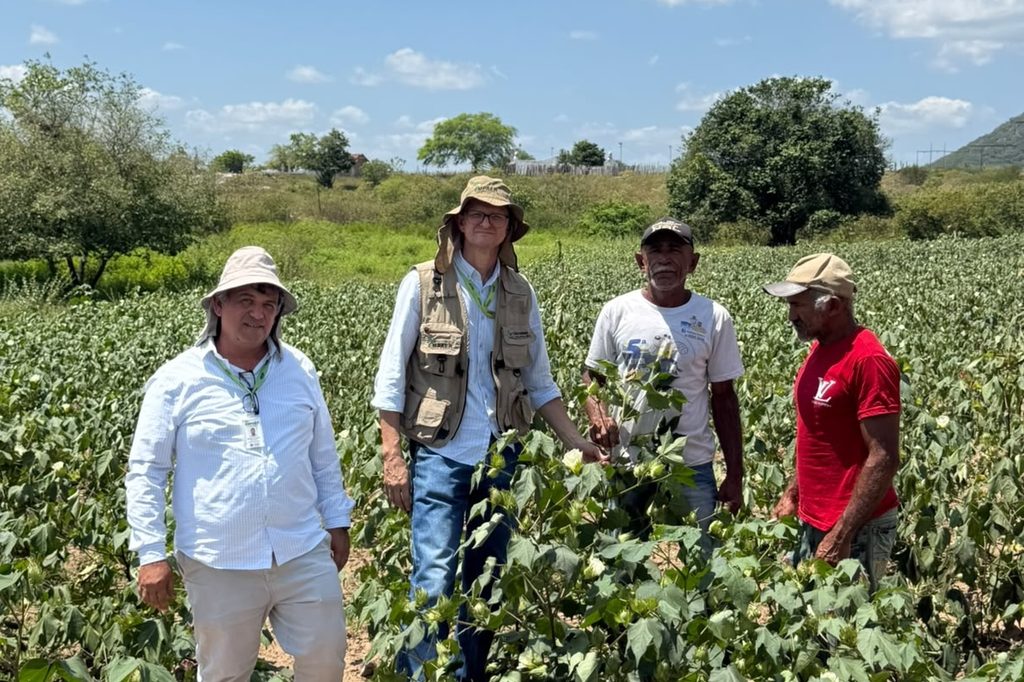
This season, the farmers participating in OCCRegenerative® Brazil will become part of the Regen Fibers certification.
We believe meaningful change in textiles begins long before a fabric is woven or a garment is sewn. It begins with the way we value our raw materials, the people who grow them and the ecosystems that make their cultivation possible.
By joining the Regen Fibers movement and signing the Manifesto for Real Regenerative Agriculture, we are reinforcing our commitment to a textile system built on greater transparency, responsibility and connection to the land.
Because if we want to change the future of textiles, we have to start at the roots.
Sign the manifesto: https://theregen.institute/la-alianza/
Explore OCCRegenerative® Brazil: https://www.organiccottoncolours.com/origin/occregenerative-brazil/